Tirzepatide Research: What Happened to People
Tirzepatide research found lower sugar and weight
A smaller meal may fill you sooner. Tirzepatide research explains why, but studies in people give the clearest answer.
At least eight Phase 3 studies included tens of thousands of people. These are large late tests done near approval.
Five studies covered type 2 diabetes, while five others covered obesity. Both sets reused the labels 1-5, so the sections below name the people and year instead.
Across these studies, blood sugar, weight, blood pressure, and harmful cholesterol fell. An early heart-and-kidney finding also favored tirzepatide.
The heart finding isn't final. You'll see who took part, how long the study ran, and what changed.
Tirzepatide first changed weight in mice and insulin in cells
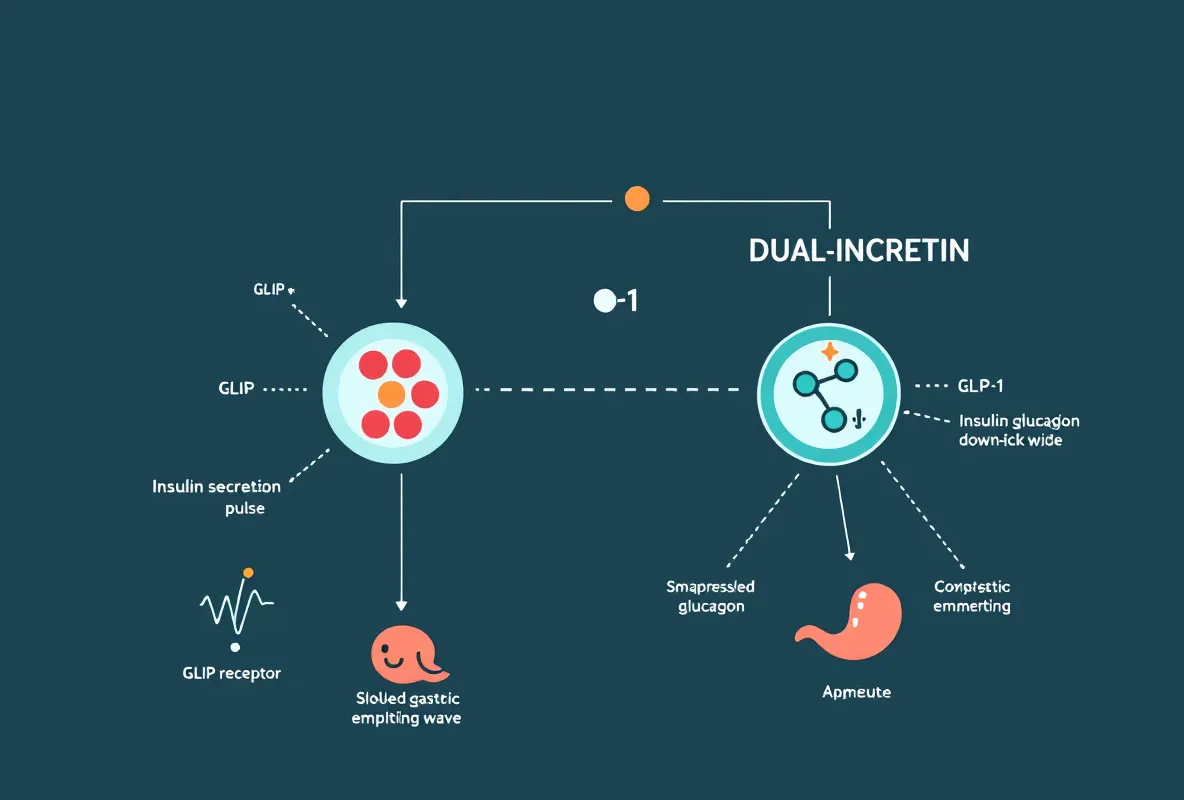
The early work was small and partly done in animals. A 2018 paper tested tirzepatide beside two gut hormones, called GIP and GLP-1, in a dish of cells [1].
Mice given tirzepatide ate less and weighed less than mice given a GLP-1 drug. A Phase 1 study, an early safety test, also included people.
Their fasting sugar and weight were lower. That first human test was too small to settle how well the drug works.
A 2020 study looked more closely at pancreas cells [2]. Tirzepatide copied GIP more strongly than GLP-1.
The paper found that tirzepatide's GLP-1 part worked differently from natural GLP-1. In those cells, natural GLP-1 lost strength sooner than tirzepatide.
Another GLP-1 cell test found that insulin release lasted longer. A dish of cells can't show what you'll feel or which harm you'll face.
A 2023 review compared these findings with other drugs that copy GIP and GLP-1 [32]. That review couldn't turn dish work into proof for people.
Tirzepatide lowered blood sugar in adults with type 2 diabetes
The main studies enrolled adults with type 2 diabetes. The people didn't all use the same drugs or have the same heart risks.
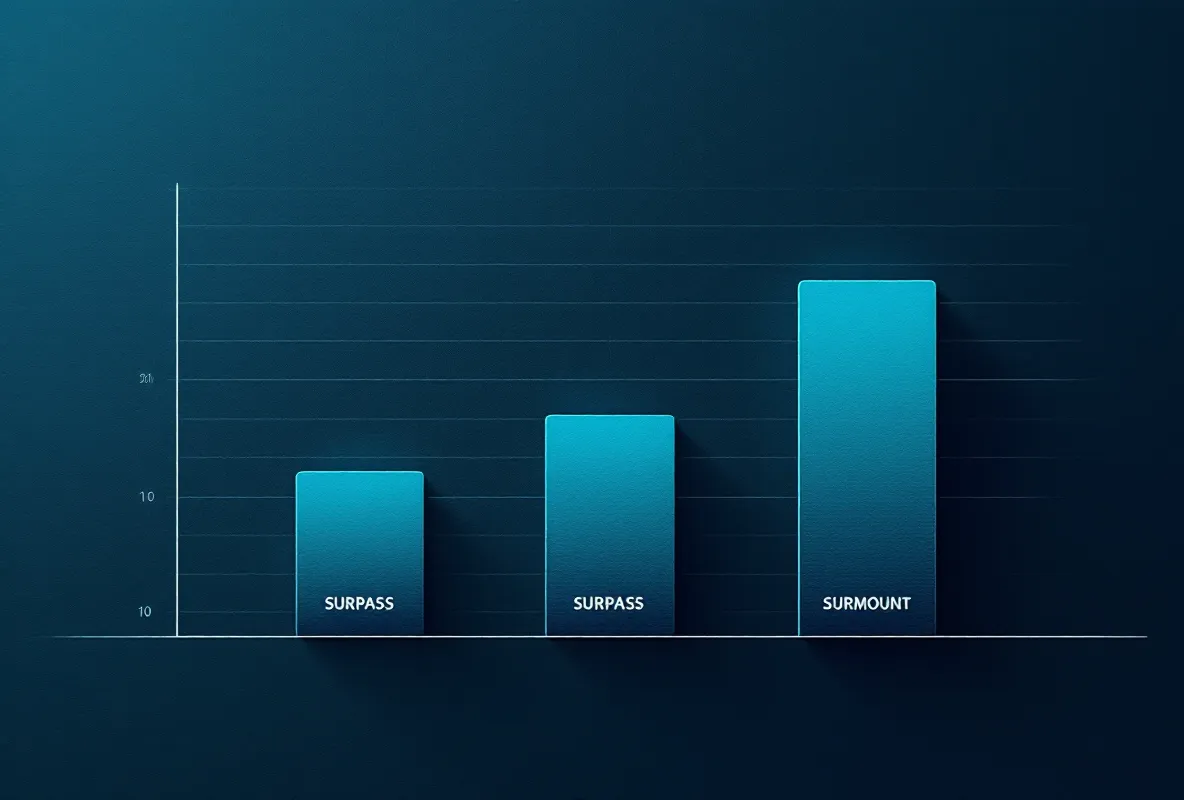
The 40-week study — This Phase 3 test followed 1,879 adults taking metformin in 2021. At 5/10/15 mg, tirzepatide lowered the three-month sugar test more than semaglutide, a GLP-1 shot [3].
The tirzepatide groups also lost more weight. The change grew with each tested dose.
The heart study in type 2 diabetes — ClinicalTrials.gov lists the test of up to 15 mg of tirzepatide against dulaglutide, another GLP-1 shot [9]. Everyone also had heart disease and type 2 diabetes.
The 2026 follow-up found 16% fewer combined heart-and-kidney problems [13]. Stomach and bowel trouble affected 42.5% with tirzepatide and 35.9% with dulaglutide [13].
Blood pressure — A 2023 review found helpful drops in the upper reading [8]. Another 2023 review found drops at 5 mg, 10 mg, and 15 mg [10].
Harmful cholesterol and blood fats also fell. Helpful cholesterol rose.
Against long-acting insulin — A 2024 review found larger blood-sugar and weight changes with tirzepatide [11]. The review covered several insulin plans.
Older adults — A 2025 review found similar blood-sugar changes in older people with type 2 diabetes [33]. You can't assume your low-sugar risk matches theirs.
Tirzepatide led to large average weight loss
The largest weight study, SURMOUNT-1 — This 72-week Phase 3 study from 2022 followed 2,539 adults without diabetes. A body-size score of 30 meant obesity; 27 meant excess weight plus another health problem [4].
At week 72, average loss was 15.0% at 5 mg, 19.5% at 10 mg, and 20.9% at 15 mg. The sugar-pill group lost 3.1%, and most stomach problems weren't severe.
The semaglutide study, SURMOUNT-5 — This 72-week study from 2025 followed 751 adults without diabetes. Tirzepatide at 10/15 mg was compared with semaglutide at 1.7/2.4 mg [5].
Tirzepatide averaged 20.2% loss, while semaglutide averaged 13.7%. The gap probably wasn't caused by chance.
The stopping study, SURMOUNT-4 — A 2024 study found that people moved to a sugar pill regained 11.8% of starting weight by week 88 [18]. People who stayed on tirzepatide kept losing.
Drugs known to raise weight — A 2026 review grouped three weight trials as 1/3/4 and found about one person in five took these drugs [34]. Their weight change was close to the main SURMOUNT-1 result.
Early type 2 diabetes in Chinese adults — A 2026 Phase 3 study found larger drops in the three-month blood-sugar test by week 40. The doses were 5/10/15 mg [35].
Sleep apnea — A 2024 study found fewer breathing pauses during sleep [15]. That finding led to approval for sleep apnea.
Heart failure — A 2025 study found fewer symptoms and fewer limits on daily tasks [16]. Everyone had obesity and a heart that squeezed well but had trouble filling.
Scarred fatty liver — In 2024, liver swelling and scar tissue both eased [12]. That doesn't create an approved use or promise a change in your liver.
Tirzepatide vs semaglutide is clearer for weight than heart risk
Two direct studies favor tirzepatide for weight. They don't show a clear heart winner.
One type 2 diabetes study found lower sugar and more weight loss than with semaglutide 1 mg [3]. Study 5 also favored tirzepatide over semaglutide 2.4 mg [5].
Semaglutide copies the gut hormone called GLP-1. The 2026 insurance report also covered people with type 2 diabetes.
That report used five US insurance studies from 2018-2025. It didn't assign drugs by chance, as a fair test would, so the patients may have differed before treatment.
One record check compared tirzepatide with dulaglutide. Its 95% range crossed equal heart risk, which means no winner was clear.
Another check compared semaglutide with sitagliptin, a daily diabetes pill, and favored semaglutide. The tirzepatide and semaglutide check also had a 95% range that included equal risk [14].
Doctors may call the direct studies Phase 3 tests. They give firm weight and sugar results but can't prove a heart winner for you.
Heart and kidney findings aren’t final yet
The heart question matters because weight isn't the only concern. Studies also watched heart attacks, strokes, kidney trouble, blood pressure, and cholesterol.
One study compared tirzepatide with dulaglutide, a GLP-1 shot, in type 2 diabetes [9]. Everyone already had heart disease.
In 2026, the follow-up found 16% fewer problems in a six-part heart-and-kidney count [13]. That count joined several kinds of trouble into one result.
A separate 2026 review of insurance records found similar heart results for tirzepatide and semaglutide [14]. That kind of review can't rule out old differences between the patients.
Blood pressure and blood fats improved in two other reviews [10]. A combined look at diabetes studies found the same broad change [8].
No one knows how much came from weight loss or each copied hormone. Results from a group won't give you a personal heart answer.